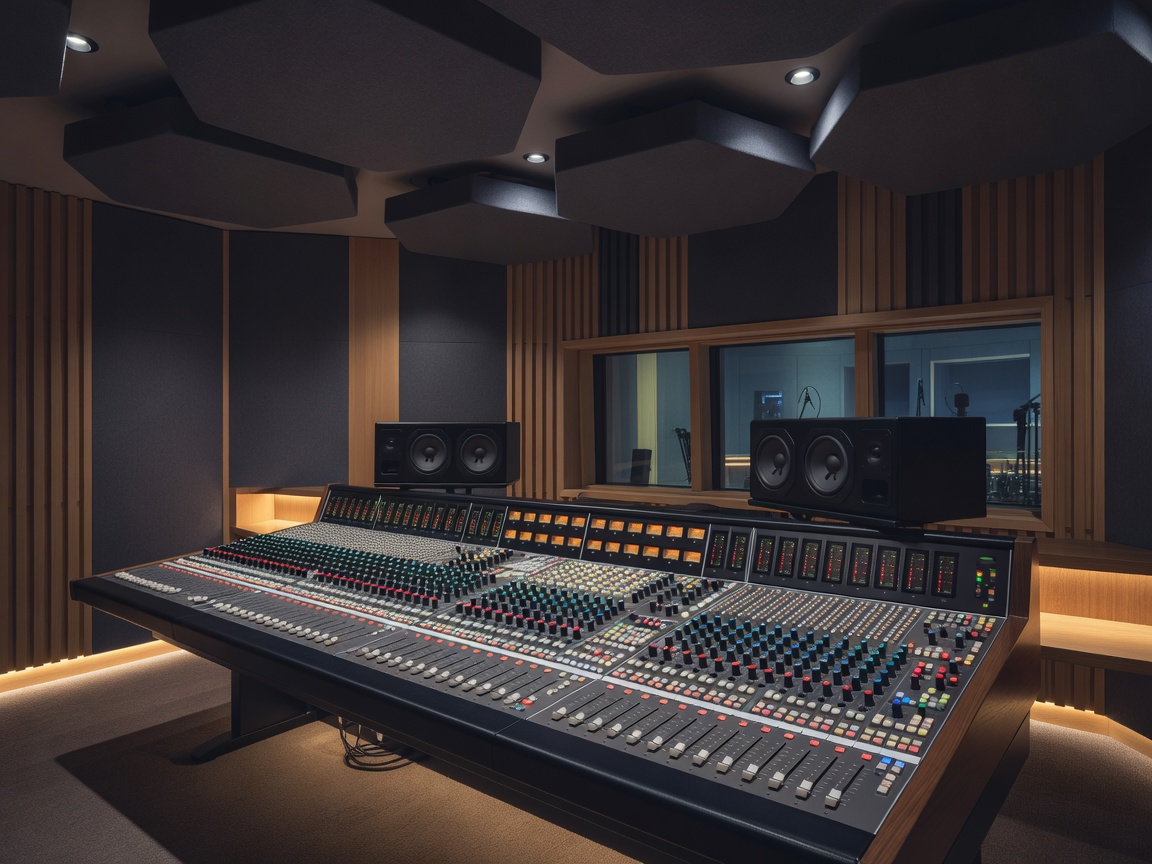
Professional recording studios
Professional facilities usually separate a control room from one or more recording spaces. They are suited to ensembles, complex overdubs, orchestral work and sessions that need reliable technical support. Their advantage is capacity. There may be multiple rooms, dedicated isolation, larger microphone selections and an engineer who understands the signal path. Their limitation is commitment. A large room can be inefficient for a solo voice, a short overdub or a project with a compact technical brief.
Confirm the current room specification, available support and whether an engineer is included. A facility’s category does not guarantee a particular console, microphone collection or working method.
Project and residential studios
Project studios range from single-room workspaces to carefully designed small facilities. Residential studios add living accommodation or occupy a domestic building. Both can reduce travel between work and rest. They often suit songwriting, electronic production, editing, voice work and small overdub sessions. The trade-off can be fewer isolated rooms, less simultaneous recording capacity and stricter access or noise policies.
Ask about working hours, accommodation arrangements, monitoring conditions, instrument access and the separation between personal and recording areas. A residential format should be assessed as a complete environment, not only as a room photograph.
Mixing and mastering environments
Mixing facilities are built around monitoring accuracy, recall and controlled routing. They may not offer a large live room. Mastering environments focus on final balance, translation and delivery preparation. They require a different decision process from tracking rooms. Ask about supplied references, file requirements, revision handling and delivery formats. Do not assume that a room designed for mixing is suitable for recording a full ensemble.
Live rooms and rehearsal hybrids
Live recording spaces prioritize interaction between musicians. Rehearsal/recording hybrids can be efficient when arrangements are still developing. They may support repeated takes without moving equipment between rooms. Their limitation is often sound separation. Check whether partitions, isolation booths or independent monitoring paths are available. A lively room can be useful for drums and ensembles, but less suitable for close-miked material that needs maximum control.
Selection matrix
- Large ensemble: prioritize live-room size, line-of-sight communication and isolation.
- Solo production: prioritize monitoring, editing workflow and predictable access.
- Voice or overdub: prioritize quiet isolation, microphone options and fast setup.
- Mix or master: prioritize room accuracy, recall and delivery communication.
Good for
Use professional rooms for scale and support. Use project rooms for focused production. Use residential formats for concentrated multi-day work. Use mixing or mastering rooms when the work is primarily post-recording. Use live spaces when musician interaction matters more than maximum separation.
Check before booking
- Room dimensions and current availability.
- Engineer inclusion and technical support.
- Isolation, monitoring and access hours.
- Instrument, equipment and file-transfer arrangements.
- Cancellation terms and additional costs.