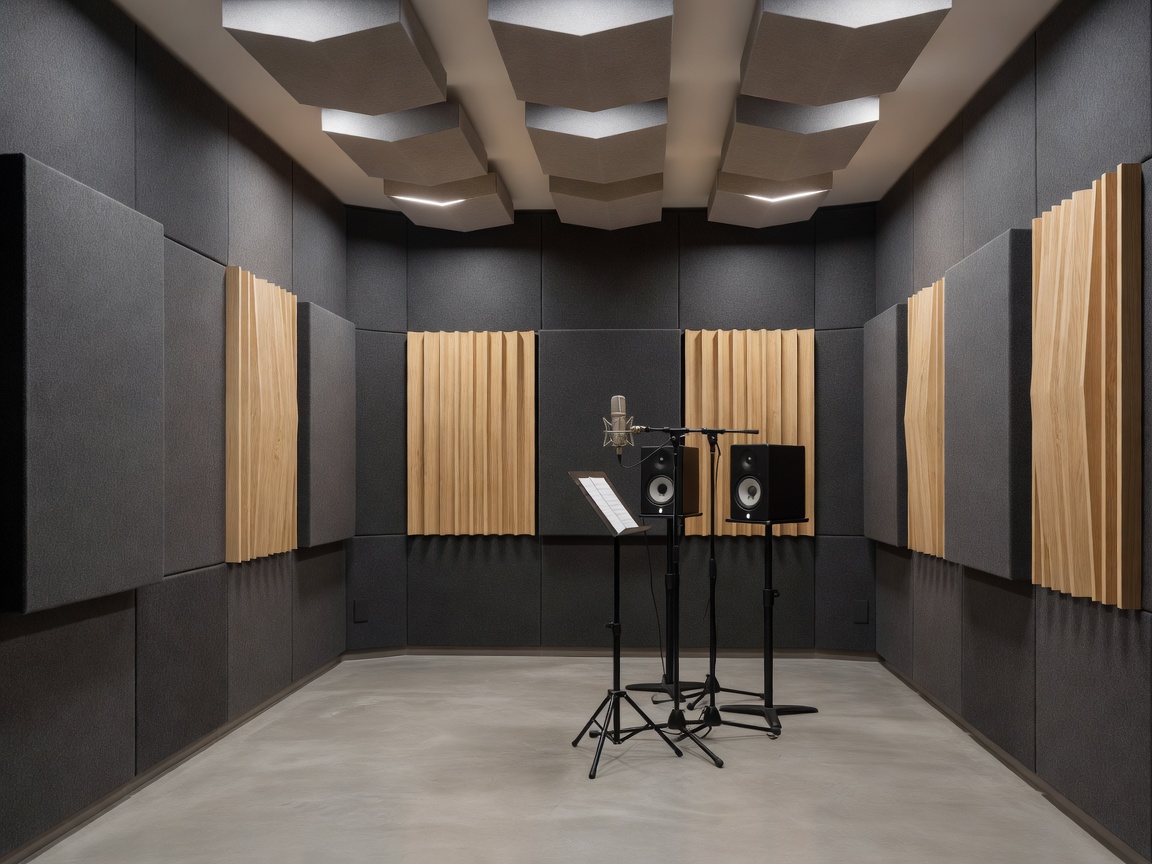
Control room and live room
A control room is designed for monitoring and decision-making. A live room is designed for performance and acoustic interaction. They may be separated by a window, a wall or a wider facility plan. The distinction matters because a room that feels impressive may still be unsuitable for accurate mixing, while a controlled room may not provide the desired performance character.
Ask what the room is intended to support. Confirm whether the quoted space includes a separate booth, alternate monitoring position or communication system.
Isolation and sound separation
Isolation reduces unwanted sound transfer between rooms and from the building. It supports simultaneous recording, quiet vocal takes and predictable pauses. Separation is never absolute in every building. Doors, ventilation, floors and neighboring activity all influence results. A facility should explain its practical limits rather than promise silence.
For sensitive sessions, ask about external noise, concurrent use, quiet hours and the procedure for handling interruptions. Do not treat a photographic impression as acoustic evidence.
Reflection control
Early reflections can affect stereo image, transient clarity and perceived balance. Absorptive, reflective and diffusive surfaces each shape the room differently. The useful balance depends on the room’s dimensions, monitoring position and intended work. A fully dead room is not automatically more accurate; excessive absorption can reduce useful spatial information.
Ask whether the room has been measured, how listening positions are selected and whether treatment is fixed or adjustable. Exact acoustic specifications should be confirmed with the facility.
Bass management and dimensions
Low-frequency behavior is strongly affected by room proportions, boundaries and listening position. Modes can create uneven bass perception. Bass management may include architectural volume, tuned treatment, broadband absorption and careful monitor placement. These systems should be designed and assessed by qualified professionals.
This guide does not provide construction instructions. For a booking, ask how the room supports low-frequency decisions and whether alternate listening references are available.
Monitoring position and architecture
Symmetry around the listening axis usually supports consistent stereo judgment. Distance from boundaries, speaker height, desk position and listener placement all matter. A large desk can affect reflections. A window can influence symmetry. Architecture is part of the signal path because it shapes what reaches the listener.
Good for
Use controlled rooms for critical monitoring and mixing. Use live rooms when natural interaction or ensemble energy is central. Use isolated booths for quiet sources and flexible overdubs. Use adjustable spaces when a project needs both controlled and lively responses.
Check before booking
- Room purpose, dimensions and current treatment.
- Isolation limits and concurrent-room policy.
- Monitoring position and reference systems.
- Access to booths, live rooms and communication paths.
- Whether acoustic information is measured or descriptive only.